Tools and Tips to Improve Your LocketVault Entries
How to document a piece the way a pro would, with tools you probably already own.
When a piece crosses my counter, I can tell a lot in a few seconds: the stamp, the weight, the way it’s made. The good news is that you can capture most of that information at home. A strong entry is the difference between “a gold bracelet” and a record an insurer, appraiser, or family member can actually use to identify the true value of a piece.
Here’s how to make every entry count.
Your at-home toolkit
Everything on this list is easy to find, and I’ve gathered my favorites in one place Shop my recommended tools on Amazon →
Your phone camera. Turn on macro or portrait mode for close-ups, and yes, you will need to please wipe the lens first.
A jeweler’s loupe (10x). An inexpensive loupe lets you read tiny stamps, maker’s marks, and engravings that your eye will miss.
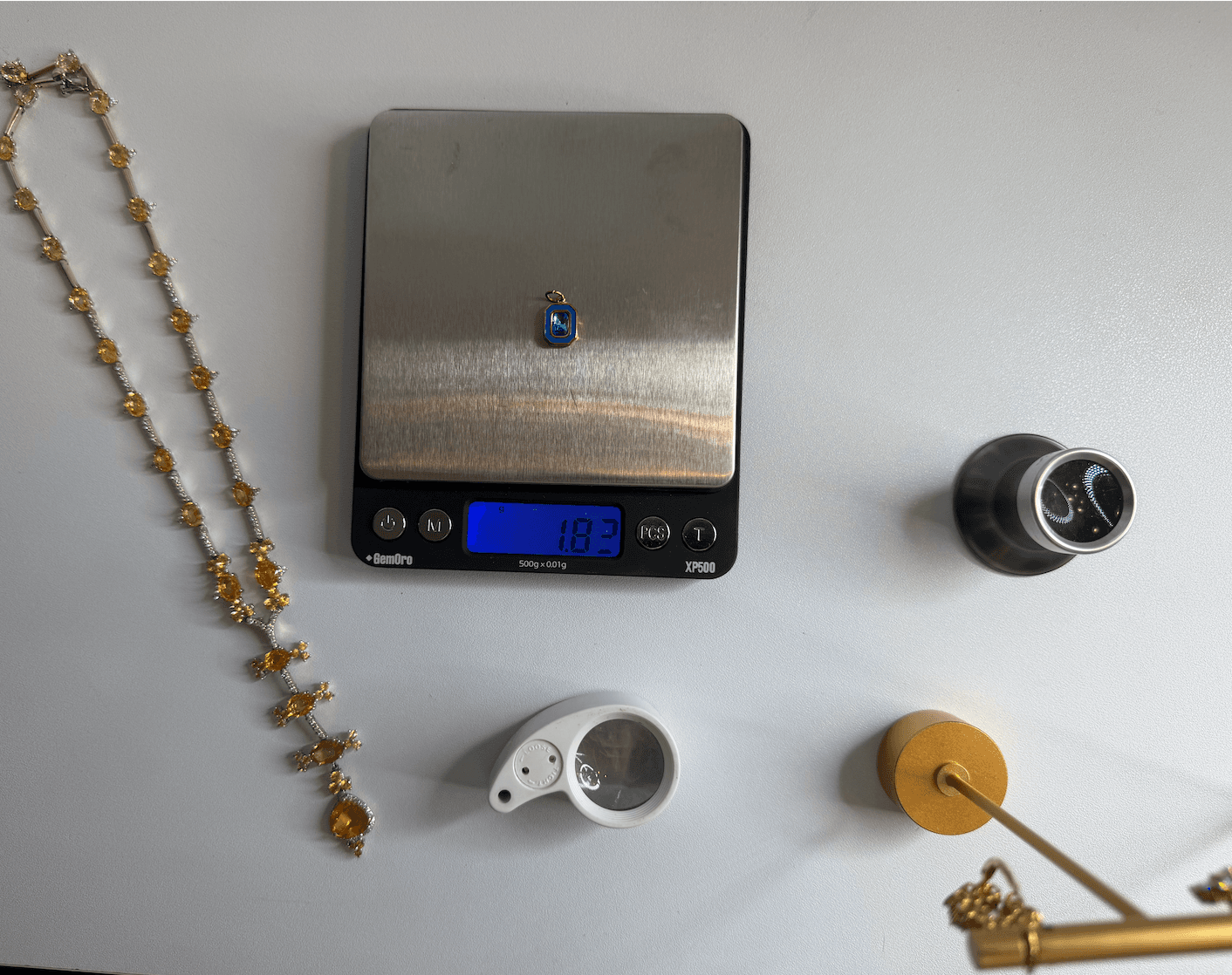
A small digital scale. One that measures in grams and/or in pennyweights, either way make sure you know which unit of measure you are using and stay consistent. This is one of the most important parts when valuated precious metals.
A ruler or calipers. Record length, width, and diameter. Chains, bracelets, and pendants are hard to identify without measurements.
A consistent, clear background. I highly recommend photographing every piece on the same simple surface, such as a white sheet of copy paper, a wood floor, or a jewelry display or box. A clean background keeps the focus on the piece, and using the same one each time makes your vault look organized and easy to browse.
A soft cloth. Clean fingerprints and dust off before you shoot. Details show up better on a clean piece.
Photos that do the work
The full piece. Lay it flat on your backdrop and shoot from directly above.
Scale. Take one photo next to a ruler or a coin so its size is clear. Bonus points if you add a photo of the item on your at-home scale to confirm weight identification.
The marks. Photograph any stamps, hallmarks, or engravings up close, using your loupe to find them first.
The details. Capture the clasp, the setting, and any unique features or wear.
On you. A photo of the piece being worn shows scale and helps identify it later.
Details to record
Metal and purity. Look for stamps like 14K, 18K, 750, 925, or PT950, and note exactly what you see.
Weight and measurements. Add the weight and dimensions from your scale and ruler. Remember to confirm which unit you are measuring in and remain consistent.
Stones. Note the type, color, shape, and number of stones, plus anything from a certificate. Many lab-graded diamonds carry a tiny report number laser-inscribed on the girdle, which you may be able to spot with a loupe.
Maker or brand. Record the designer or brand name and any serial or reference number.
Purchase details. Write down where and when you bought it and what you paid, even if it’s an estimate.
Status. Note whether this item needs repair, is on-loan, or currently in your at home, details like where your home is should never be disclosed and code words for locations are encouraged.
Watches and handbags
Watches. Record the brand, model, and reference and serial numbers, which are usually printed on the case back or the warranty card. Don’t open the case yourself. Keep the box, papers, and service records.
Handbags. Photograph the interior tags, date code or serial number, and hardware stamps. Save the authenticity card, dust bag, and receipt.
Upload the paperwork
Scan or photograph receipts, appraisals, grading reports, warranty cards, and service records, and attach them to the piece. If an original gets lost, your vault still has it.
Don’t skip the story
Who gave it to you? What was the occasion? Who wore it before you? These details don’t show up in any appraisal, but they’re often what your family will value most.
Keep it current
Values change, especially with metal prices. Review your entries once a year, and update appraisals every few years or after any repair, resizing, or change to a piece. Add new pieces the day they come home, while the receipt is still in hand.
Start with one
Pick one piece today and give it the full treatment: five photos, the details, the paperwork, and the story. Once you’ve done one, the rest go fast.
Stay golden,
Lauren Kaminsky Goldman
Founder, LocketVault
Add a piece to your vault →
Need the tools? Visit my Amazon storefront.
As an Amazon Associate, I may earn from qualifying purchases.