There is always a story to tell
Every piece of jewelry has a story. Most of them are never written down.
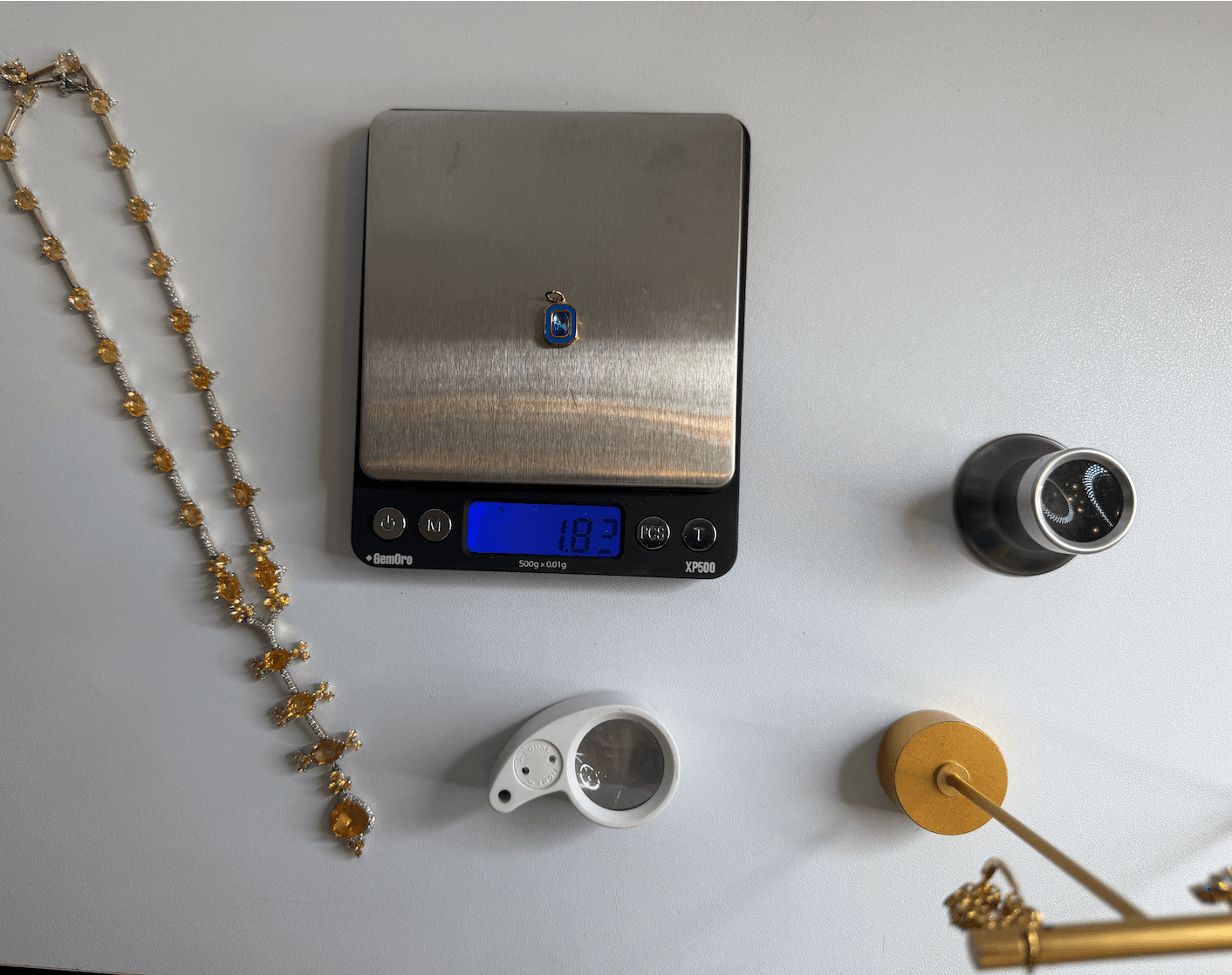
My first year working in the pawn shop was when I truly fell in love with the stories behind the pieces left behind. Every day, something new crossed the counter: a signet ring worn smooth, a watch engraved with initials, a bracelet that had clearly been loved for a lifetime. Each one had belonged to someone. Each one had a reason.
Around the same time, I opened a jewelry boutique inside Beauty & Essex. Guests would pick up a vintage piece, turn it over in their hands, and ask the question I heard more than any other: What's the story behind this one?
Too often, I had to tell them I didn't know. I watched the disappointment on their faces, and I felt it too. The piece was beautiful. But the part that would have made it unforgettable was gone.
The chain
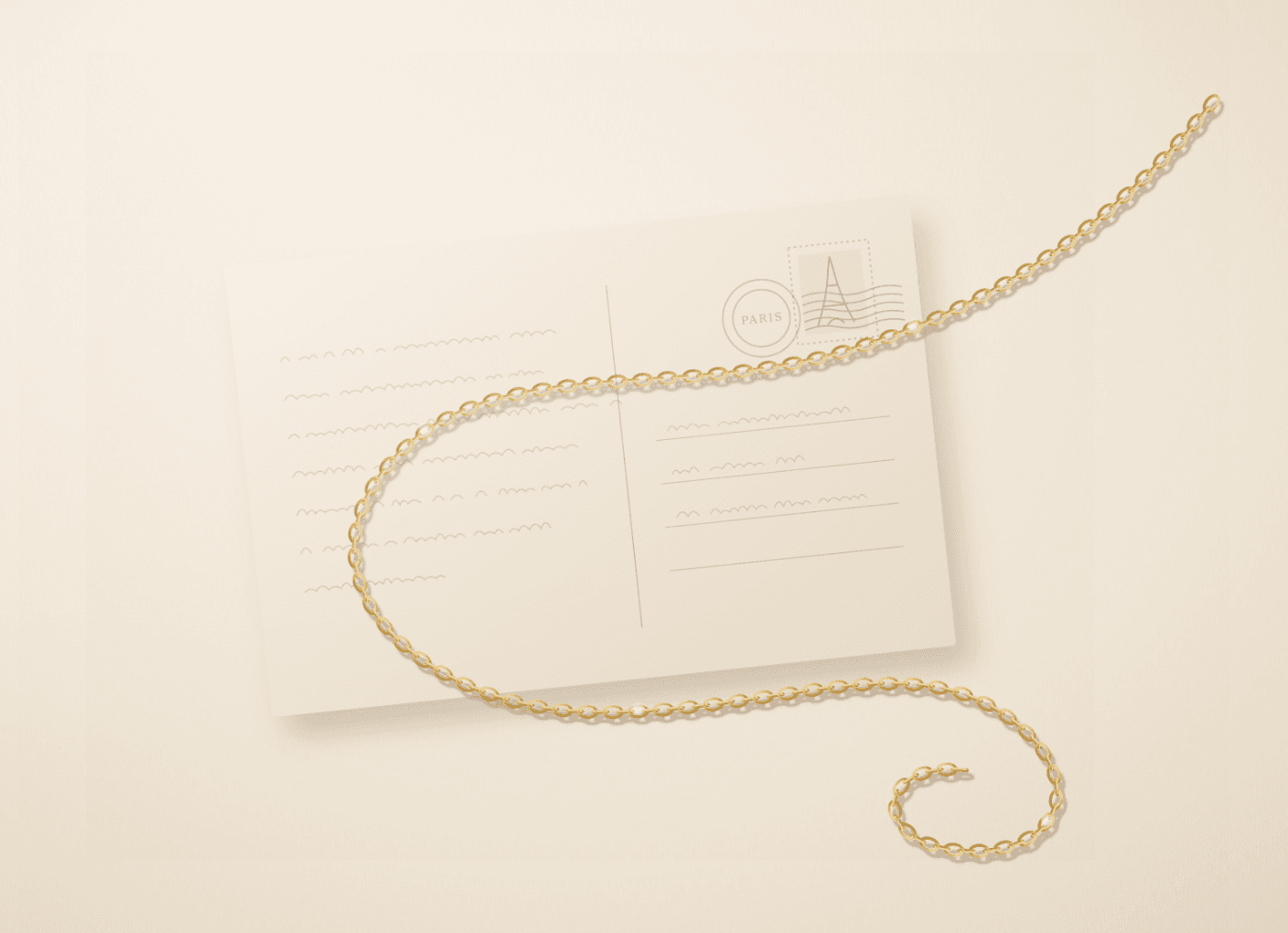
One piece has stayed with me more than any other. It was a long, beautiful chain, and at each station along it sat a tiny figure made of precious gemstones. It was charming and clearly exceptional. And I had no idea what it was.
So I started digging. Hallmarks, signatures, auction records, collector catalogs. Slowly, the answer came together. The chain was by Van Cleef & Arpels, and the design had a name: Mercredi à Paris, "A Wednesday in Paris."
The figures weren't random. Together, they told the story of a family spending an afternoon in Paris. Wearing it, you carried that whole afternoon around your neck, one little scene at a time.
I remember the feeling when it clicked. The piece went from beautiful to meaningful in a single moment, just because I finally knew what it was meant to say.
What research can find, and what it can't
Here is the part that has never left me. Research gave me the maker's story: who made it, what it was called, what it was meant to depict. That story was written down, so it survived.
But the owner's story was gone. Who bought it, and for whom? Was it a gift for a birthday, an anniversary, a first trip to Paris? Did a mother wear it and pass it to her daughter? Did someone fall in love with it in a shop window on a Wednesday afternoon of their own?
No hallmark, catalog or auction record can tell you that. Only the people who lived it can, and only if someone writes it down.
That's the difference between provenance and value. Value can be appraised again at any time. A family's story, once it's lost, is lost for good.
The pieces you'll never let go
I'm not talking about the pieces you might sell one day. I mean the serious ones. The ring you'll hand to your daughter. The watch your father wore every day. The necklace that marks the best afternoon of your life.
I built LocketVault for those pieces. It won't solve every mystery that crosses a jeweler's counter. But it can make sure the stories that matter in your family are told, kept and passed down.
For each piece that matters, record more than the appraisal:
Where it came from. The maker, the design name, the store or the person who chose it.
The occasion. The birthday, the anniversary, the trip, the reason.
Who has worn it. Every owner you know of, in order.
Its changes. Resizing, resetting or repairs, and who did the work.
A memory. One moment you associate with wearing it, in your own words.
Who it's meant for. The person you hope will wear it next.
You don't need to write a novel. A few honest sentences today will mean more to the next person who holds it than any appraisal ever could.
Stay golden,
Lauren